The Biggest Tax Mistake Small Businesses Make (And How to Avoid It in 2026)
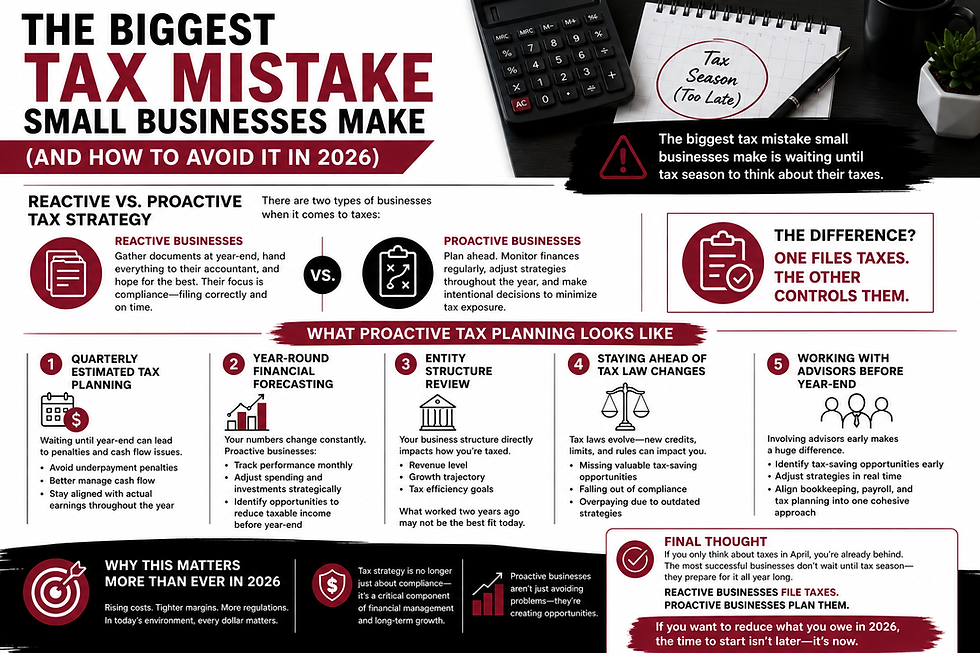
For many small business owners, tax season feels like a once-a-year event—a deadline to meet, forms to file, and numbers to finalize.
But that mindset is exactly where the biggest (and most costly) mistake happens.
The biggest tax mistake small businesses make is waiting until tax season to think about their taxes.
By the time April rolls around, most of your opportunities to reduce your tax liability are already gone. At that point, filing is reactive—not strategic.
If you want to reduce what you owe in 2026, tax planning needs to happen all year long.
Reactive vs. Proactive Tax Strategy
There are two types of businesses when it comes to taxes:
Reactive businessesThese businesses gather their documents at year-end, hand everything to their accountant, and hope for the best. Their focus is compliance—filing correctly and on time.
Proactive businessesThese businesses plan ahead. They monitor their finances regularly, adjust strategies throughout the year, and make intentional decisions to minimize tax exposure.
The difference? One files taxes. The other controls them.
What Proactive Tax Planning Looks Like
A strong tax strategy isn’t complicated—but it does require consistency and foresight.
Here’s what proactive planning should include:
1. Quarterly Estimated Tax Planning
Waiting until year-end can lead to penalties and cash flow issues. By calculating and paying estimated taxes quarterly, businesses can:
Avoid underpayment penalties
Better manage cash flow
Stay aligned with actual earnings throughout the year
2. Year-Round Financial Forecasting
Your revenue, expenses, and profitability are constantly changing. Without ongoing visibility, you’re making decisions in the dark.
Proactive businesses:
Track performance monthly
Adjust spending and investments strategically
Identify opportunities to reduce taxable income before year-end
3. Entity Structure Review
Your business structure directly impacts how you’re taxed.
Whether you operate as an LLC, S-Corporation, or C-Corporation, your structure should be reviewed regularly to ensure it still aligns with your:
Revenue level
Growth trajectory
Tax efficiency goals
What worked two years ago may not be the best fit today.
4. Staying Ahead of Tax Law Changes
Tax laws are constantly evolving—new credits, deduction limits, and compliance requirements can significantly impact your business.
Without staying informed, you risk:
Missing valuable tax-saving opportunities
Falling out of compliance
Overpaying simply due to outdated strategies
5. Working With Advisors Before Year-End
One of the most common mistakes is involving advisors too late.
By the time you’re preparing your return, your accountant’s role is limited. But when you work with professionals throughout the year, they can help you:
Identify tax-saving opportunities early
Adjust strategies in real time
Align bookkeeping, payroll, and tax planning into one cohesive approach
Why This Matters More Than Ever in 2026
As businesses continue to navigate rising costs, tighter margins, and increased regulatory complexity, every dollar matters.
Tax strategy is no longer just about compliance—it’s a critical component of financial management and long-term growth.
The businesses that take a proactive approach aren’t just avoiding problems—they’re creating opportunities.
Final Thought
If you only think about taxes in April, you’re already behind.
The most successful businesses don’t wait until tax season—they prepare for it all year long.
Reactive businesses file taxes.Proactive businesses plan them.
If you want to reduce what you owe in 2026, the time to start isn’t later—it’s now.


Comments